When to book a Vancouver seaplane tour
Vancouver's floatplanes leave Coal Harbour on every day of the year, so the real question is what the sky will hand you. High summer gives the clearest air and the longest evenings, while winter paints the mountains white. This guide goes through the year month by month, then looks at the hour of the day and the few flights that keep a calendar.
Flights run in every month
Both airlines at the Coal Harbour terminal fly sightseeing loops all year. Harbour Air's Classic Panorama, from ~$135, takes off daily in rain or shine, and Seair's Beaver skyline flight, from ~$139, keeps a daily schedule through the winter as well. The calendar decides what you will see from the window, not whether a plane is waiting at the dock.
What can stop a flight is the weather on the day itself. Floatplanes fly by sight, so cloud sitting low over the water can hold a departure or send the pilot along another route, and a strong wind can ground the plane altogether. When the operator cancels, you are normally offered a refund or a new time, but check the listing's terms for your booking. Because the six tours we compare cancel free until 24 hours before, you can pick a date now and change it once the forecast firms up.
Vancouver's weather through the year
Typical daytime highs, with what each month tends to bring for a flight. Averages hide plenty of variety from one year to the next.
| Month | Typical high | Sky and mountains | Seasonal flights |
|---|---|---|---|
| January | 44 °F (7 °C) | Rainy season with more low cloud; snow on the peaks | No lake landing on the glacier flight |
| February | 47 °F (8 °C) | Wet, snow on the North Shore peaks | No lake landing |
| March | 51 °F (10 °C) | Last of the rainy months, white summits | No lake landing |
| April | 56 °F (13 °C) | Past the wettest stretch; snow lingers up high | Victoria whale-watching package from April 1; Butchart day from mid-April |
| May | 62 °F (17 °C) | Milder days | Whistler day packages begin |
| June | 67 °F (19 °C) | The longest days, with sunset after 9 pm near the solstice | Whistler packages; no lake landing yet |
| July | 72 °F (22 °C) | Driest and clearest; the busiest month at the dock | Lake landing season opens |
| August | 72 °F (22 °C) | Dry and clear, with busy departures | Lake landing; Whistler packages |
| September | 66 °F (19 °C) | Highs still close to summer | Last month for the Whistler packages |
| October | 57 °F (14 °C) | The rain returns | Last month for the lake landing; Butchart day ends early in the month |
| November | 49 °F (9 °C) | Rainy, first snow on the summits | Whale-watching package ends early in the month |
| December | 44 °F (7 °C) | Short days; rain in town, snow on the peaks | Year-round flights only |
The pattern reads plainly. October to March brings most of the year's rain. July and August are the driest and clearest weeks, while the months either side of them sit between the two with less of a rush.
Clear air and full docks in high summer
July and August give you the best odds if long views are the goal. Highs sit around 72 °F (22 °C), and on a clear day the classic route shows Howe Sound stretching north-west into the mountains, with the Cascades on the horizon. June adds the longest evenings of the year. Around the solstice the sun sets after 9 pm, which leaves room for a flight after a full day in the city.
Good weather draws company. Summer also brings the most cruise ships to Canada Place next door, and the floatplane terminal sees its biggest crowds. Book ahead for July and August, and earlier still if your date lines up with a ship in port (our guide to a seaplane flight on a cruise day covers the timing). On Harbour Air, seats are taken first come at boarding, so on a full summer plane the quickest walkers pick the seats.
Gray skies and white mountains in winter
From October to March Vancouver is wet, and the cloud sits lower more often than in summer. The flights keep going all the same, and a gray morning is not a lost one. Harbour Air's own description makes the case that a moody, overcast day has a look of its own.
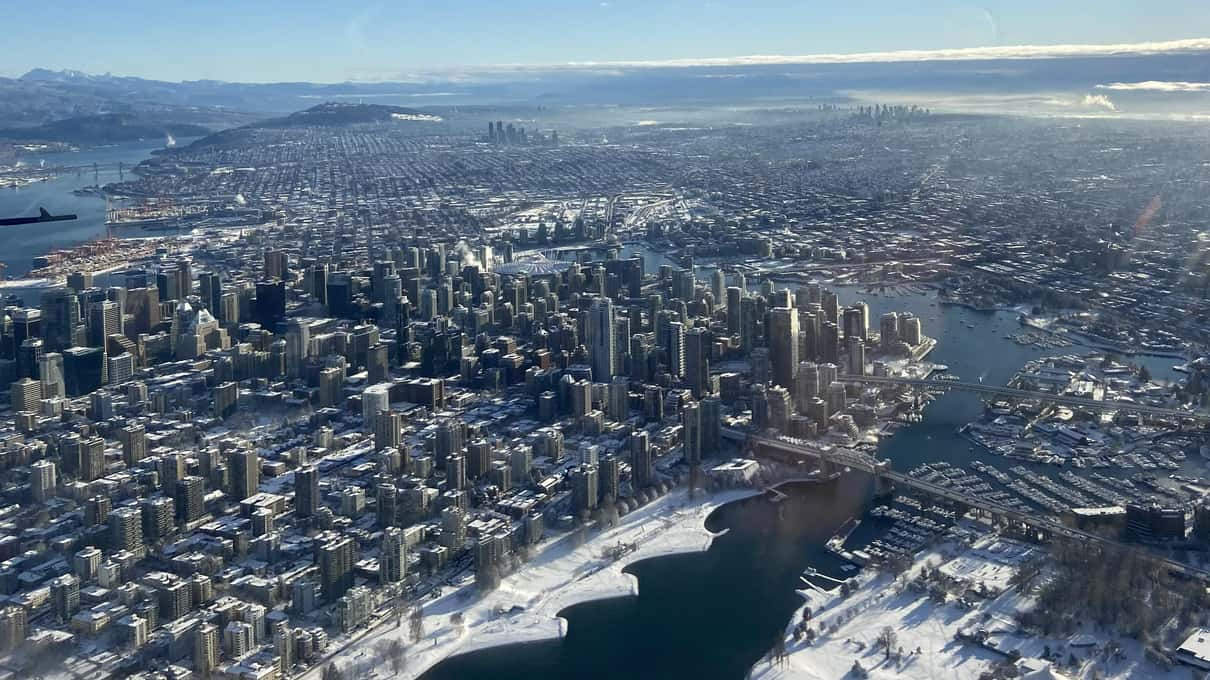
Winter also offers the one view summer cannot. Snow covers the North Shore peaks from late autumn into spring, so a flight between December and March usually shows white summits above a green city, and in a cold spell the snow can reach the rooftops too. Bring a warm layer for the walk along the open floats.
Morning calm or evening light
The hour you fly matters almost as much as the month. Morning flights often meet calmer air, and that counts in a small plane, which feels bumps more than an airliner does. If someone in your party dreads a rough ride, an early departure is the gentler choice; your first seaplane flight walks through everything else that happens on board.
Later in the day the light does the work. On summer evenings a low sun from the west catches the glass towers and the slopes of the North Shore, which flatters photos taken through the window. Check the departure times on the listing before you plan around a sunset.
Flights that keep a calendar
A few trips only run in part of the year, and if one of them is on your list, it decides your month more than the weather does.
- The glacier lake landing. Seair's Glacier and Alpine Lake flight, from ~$426, puts down on Lovely Water Lake only between July and October. From November to June the plane still crosses the Tantalus Range for about 55 minutes, but without the stop. Read glacier flights and lake landings before you book;
- Whistler days. Harbour Air sells its day packages in Whistler from May to September. Vancouver to Whistler by seaplane explains the one-way flight to Green Lake and how to check its dates;
- Victoria with the gardens. Harbour Air's day in Victoria with Butchart Gardens admission runs from mid-April to early October. Vancouver to Victoria by seaplane covers the one-way flights and other ways to plan the day;
- Victoria whale watching. Harbour Air also pairs two flights with whale watching in Victoria from April 1 to early November. Nobody promises whales on these trips.
A summer landing above the glaciers
Seair's 75-minute glacier flight crosses the Tantalus Range and, from July to October, puts down for about 20 minutes on Lovely Water Lake, from ~$426. Both sites cancel free up to 24 hours ahead, useful when mountain weather is hard to call.
The longest flight wants a summer day
The longest trip in these guides is a fair-weather outing by nature. Seair's Chatterbox Falls adventure, from ~$680, heads deep into the mountains to Princess Louisa Inlet after about an hour and a half of flying in all, and sets you down near the falls for half an hour. Summer is the sensible time to try it, because long days with drier skies give a route that far into the mountains its best chance. The catch is the gamble on a big fare, because it costs ~$680, the highest price on this site, and it has no reviews on GetYourGuide yet.
Choosing your day
For most visitors the plan is short. Book ahead for July or August and take the first clear morning your trip allows. In the wetter months, book the flight early in your stay, so that a cancelled departure still leaves you another day to try. GetYourGuide lets you reserve now and pay later, and both sites cancel free until 24 hours before, so holding a seat costs nothing while you watch the forecast.
Families can find the shortest flights in seaplane tours with kids, and what a Vancouver seaplane tour costs sets every fare side by side. If the airline is still open, our comparison of the two airlines covers the companies that share the dock.